theme: Colin Fall 2022 autoscale: true slidenumbers: true header: #373737, alignment(left), line-height(150%), text-scale(1.0), ITC Galliard Pro Bold Footer:
[fit] State Constitutional Law
[fit] 16 - Criminal Procedure
[fit] and Property Rights
—
Cruel and Unusual Punishment
—
Death Penalty
Washington v. Gregory 427 P.3d 621 (Wash. 2018)
State v. Santiago 122 A.3d 1 (Conn. 2015)
—
Washington v. Gregory
427 P.3d 621 (Wash. 2018)
“Excessive bail shall not be required, nor excessive fines imposed, nor cruel and unusual punishments inflicted.” U.S. Const., Amend. VIII.
“Excessive bail shall not be required, excessive fines imposed, nor cruel punishment inflicted.” Washington Const., Art I. § 14.
—
State v. Santiago
122 A.3d 1 (Conn. 2015)
—
Connecticut framework for analysis
- federal precedent
- “historical insights into the intent of our constitutional forbears”
- constitutional text
- Connecticut precedents
- precedents of other states
- contemporary norms and public policy
—
What constitutional provisions could prevent a state from executing someone? From executing anyone?
Constitutional provisions studied so far:
- Equality / Equal Protection
- Procedural Due Process
- Substantive Due Process
- Search and Seizure
- Cruel and Unusual Punishment
—
Criminal Procedure Recap
—
Topics
- Search and seizure
- Probable cause
- Good faith exception
- Warrant requirement
- Automobile searches
- Double jeopardy
- Cruel and unusual punishment
—
The right of the people to be secure in their persons, houses, papers, and effects, against unreasonable searches and seizures, shall not be violated, and no Warrants shall issue, but upon probable cause, supported by Oath or affirmation, and particularly describing the place to be searched, and the persons or things to be seized.
—
Probable Cause
People v. Griminger 524 N.E.2d 409 (N.Y. 1988)
State v. Tuttle 515 S.W.3d 282 (Tenn. 2017)
—
Good Faith Exception
State v. Koivu 272 P.3d 483 (Idaho 2012)
Commonwealth v. Edmunds 586 A.2d 887 (Pa. 1991)
—
Warrant Requirement
State v. Earls 70 A.3d 630 (N.J. 2013)
State v. Bryant 950 A.2d 467 (Vt. 2008)
State v. Leonard 943 N.W.2d 149 (Minn. 2020)
—
Automobile Searches
State v. Cora 167 A.3d 633 (N.H. 2017)
State v. Villela 450 P.3d 170 (Wash. 2019)
State v. Arreola-Botello 451 P.3d 939 (Or. 2019)
—
Double Jeopardy
People v. Aranda 437 P.3d 845 (Cal. 2019)
—
Cruel and Unusual Punishment
Washington v. Gregory 427 P.3d 621 (Wash. 2018)
State v. Santiago 122 A.3d 1 (Conn. 2015)
—
Property Rights
—
Texas Southern University v. Villareal
620 S.W.3d 899 (Tex. 2021)
“No citizen of this state shall be deprived of life, liberty, property, privileges or immunities, or in any manner disfranchised, except by the due course of the law of the land.” Texas Const., Art. I, § 19.
—
Takings
“…nor shall private property be taken for public use, without just compensation.” U.S. Const. Amend. V.
Important Precedent: Kelo v. City of New London 545 U.S. 469 (2005)
—
Kelo v. City of New London
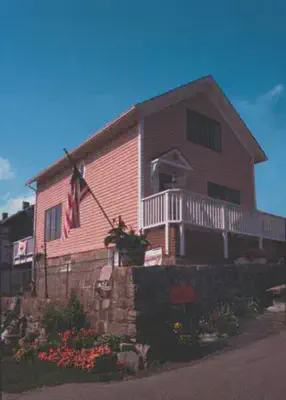
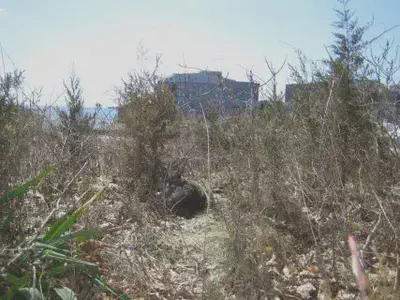
—
“Public Use” Cases
City of Norwood v. Horney 853 N.E.2d 1115 (Ohio 2006)
Bd. of Cty. Comm’rs of Muskogee Cty. v. Lowery 136 P.3d 639 (Okla. 2006)
Goldstein v. New York State Urban Dev. Corp. 921 N.E.2d 164 (N.Y. 2009)
—
Questions to guide us for “public use” cases
What should qualify as permissible “public use”?
What are the benefits and drawbacks to stronger or weaker property rights protection against government takings?
How much should our understanding of “public use” depend on differences in the constitutional texts, history, tradition, geography, and demographics?
—
City of Norwood v. Horney
853 N.E.2d 1115 (Ohio 2006)
“All men are, by nature, free and independent, and have certain inalienable rights, among which are those of enjoying and defending life and liberty, acquiring, possessing, and protecting property, and seeking and obtaining happiness and safety.” Ohio Const., § 1, Art. 1.
“Private property shall ever be held inviolate, but subservient to the public welfare… where private property shall be taken for public use, a compensation therefor shall first be made in money… and such compensation shall be assessed by a jury… ” Ohio Const., § 19, Art. 1.
—
Bd. of Cty. Comm’rs of Muskogee Cty. v. Lowery
136 P.3d 639 (Okla. 2006)
“Private property - Taking or damaging for private use. No private property shall be taken or damaged for private use, with or without compensation, unless by consent of the owner, except for private ways of necessity, or for drains and ditches across lands of others for agricultural, mining, or sanitary purposes, in such manner as shall be prescribed by law.” Okla. Const., Art. 2, §23.
“Private property - Public use - Character of use a judicial question." Private property shall not be taken or damaged for public use without just compensation… In all cases of condemnation of private property for public or private use, the determination of the character of the use shall be a judicial question.” Okla. Const., Art. 2, §24.
—
Goldstein v. New York State Urban Dev. Corp.
921 N.E.2d 164 (N.Y. 2009)
“[T]he legislature may provide … for the clearance, replanning, reconstruction and rehabilitation of substandard and insanitary areas.” New York Const., Art. XVIII, § 1.
“Private property shall not be taken for public use without just compensation.” New York Const., Art. I, § 7.
—