Strict Liability
Reminder: Wednesday’s class starts at 9:10am
Assumption of Risk
Hanks v. Powder Ridge Restaurant Corp.
“Snowtubing Waiver”
Two Common Issues
- Was the contract clear enough about releasing the defendant from liability?
- Will the court enforce contract?
- I fully assume all risks associated with [s]nowtubing, even if due to the NEGLIGENCE of [the defendants]
- I … agree I will defend, indemnify and hold harmless [the defendants] … from any and all claims, suits or demands … including claims of NEGLIGENCE on the part of [the defendants]
- I will not sue [the defendants] … for money damages for personal injury … even if due to the NEGLIGENCE of [the defendants]
Will the court enforce contract?
Various legal tests for determining if liability waiver is against public policy:
- Liability waivers are unenforceable
- Totality of the circumstances
- Six factors from Tunkl
Tunkl factors
- Business of a type generally thought suitable for public regulation.
- Defendant performs a service of great importance to the public (often a matter of practical necessity for some members of the public)
- Defendant willing to perform this service for any member of the public
- Defendant has bargaining advantage
- Standardized adhesion contract of exculpation
- Plaintiff placed under the control of the defendant, subject to the risk of carelessness by the seller or his agents.
Tort Law Values
| Era | Philosophy | Primary Goal | Concern |
|---|---|---|---|
| Classical | Corrective justice | Individual accountability | Autonomy |
| Neoliberal | Economics | Maximize utility | Efficiency |
Tort Law Values
| Era | Philosophy | Primary Goal | Concern |
|---|---|---|---|
| Classical | Corrective justice | Individual accountability | Autonomy |
| New Deal | Political Economy | Distributive justice | Power |
| Neoliberal | Economics | Maximize utility | Efficiency |
Murphy v. Steeplechase
“The Flopper”
volenti non fit injuria
volenti non fit injuria
“to one who is willing, no wrong is done”
Cardozo’s counter-examples
- “Obscure and unobserved” dangers
- Too many accidents
—
Knight v. Jewett
“Touch Football Injuries”
—
Explicit assumption of risk
Implicit assumption of risk
In-Class Exercise
Plaintiffs:
- Emily
- Lynn
- Tito
- Tatiana
Fletcher v. Rylands
Rylands v. Fletcher
Liability applies for:
PWFOPBOHL&C&KTALDMIIE
Liability applies for:
PWFOPBOHL&C&KTALDMIIE
A person who for his own purpose brings onto his land and collects and keeps there anything likely to do mischief if it escapes
Limits on Strict Liability
Fletcher v. Rylands
— PWFOPBOHL&C&KTALDMIIE
Rylands v. Fletcher
— PWFOPBOHL&C&KTA “non-natural” and LDMIIE
First Restatement
— “ultrahazardous activity”
Second Restatement
— “abnormally dangerous activity”
Indiana Harbor Belt v. American Cyanamid
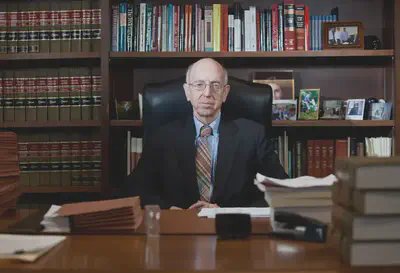
Indiana Harbor Belt v. American Cyanamid
Strict liability applies for behavior that is:
- Very risky and that risk cannot be eliminated at reasonable cost
AND
- Not susceptible to due care analysis
Restatement Definitions
“In determining whether an activity is abnormally dangerous, the following factors are to be considered: (a) existence of a high degree of risk of some harm to the person, land or chattels of others; (b) likelihood that the harm that results from it will be great; (c) inability to eliminate the risk by the exercise of reasonable care; (d) extent to which the activity is not a matter of common usage; (e) inappropriateness of the activity to the place where it is carried on; and (f) extent to which its value to the community is outweighed by its dangerous attributes.” Restatement (Second) of Torts § 520 (1977).
“An activity is abnormally dangerous if: (1) the activity creates a foreseeable and highly significant risk of physical harm even when reasonable care is exercised by all actors; and (2) the activity is not one of common usage.” Restatement (Third) Torts: Liability for Physical and Emotional Harm § 20 (2010).
Tort law is the law of
negligence.
Strict liability is the law of tort law when negligence fails.
MacPherson v. Buick Motor Co.
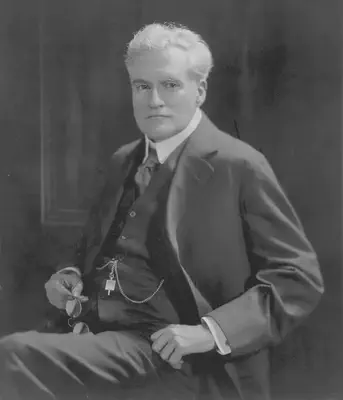
MacPherson v. Buick Motor Co.
Escola v. Coca Cola
Rationale
Power dynamics
Cost spreading / insurance
Deterrence
Extensions of Liability
Plaintiffs: Not just consumers but bystanders.
Defendants: Not just manufacturers but retailers.
Defect Requirement
Barker v. Lull Engineering
Two tests:
- Consumer expectations
- Excessive preventable danger
—
Soule v. General Motors
—
When does the consumer expectations test apply?
Not at
all clear!
It depends upon the “everyday experience of the product’s users”