Course Overview
Recap
Before you begin your law school assignments:
- Connect with your purpose.
- Discern your immediate goal.
Internal logic and mechanics of a case
- Procedural posture
- Legal question(s)
- Relevant facts
- Holding
- Reasoning(s) behind the holding
Reasoning behind the holding
Three lines of reasoning
- Precedent binds us. (Strict liability doesn’t apply for automobile accidents.)
- Analogy to products liability falls apart. (Not the same kind of power imbalance / control as products manufacturers.)
- Supreme Court reasoning in analogous case applies here. (Slippery slope, domain of the legislature)
Vosburg v. Putney
Internal logic and mechanics of a case
- Procedural posture
- Legal question(s)
- Relevant facts
- Holding
- Reasoning(s) behind the holding
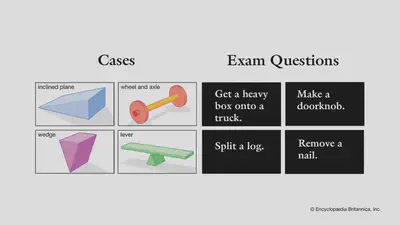
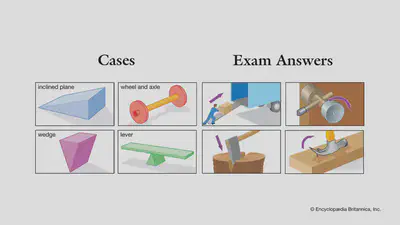
Exam question
You are a judge in the state of Loyola tasked with writing the opinion of the court in the following case. No precedent binds you on the legal issues here, but it is customary to reference the reasoning of decisions from other jurisdictions when deciding an issue of first impression. The facts of the case are as follows:
Luna Adams found that her car’s brakes were squeaking. She brought the car in to be seen by her mechanic, Naomi Donald. Donald replaced the brake pads. A week later, Adams was driving when the brakes on her car failed, causing her to run off the road and crash into a tree. Adams sued Donald for personal injuries and property damages. The case went to a jury trial. Adams motioned for summary judgment, under the legal theory that when a car mechanic fixes a part of a car, that mechanic is strictly liable for all injuries proximately caused by that part of the car failing. The trial judge denied the motion, ruling that negligence, not strict liability, governed. The plaintiff appeals the denial of that motion.
Course overview
What is torts?
Scope of tort law
What is tort law all about?
Underlying Values of Tort Law
- Corrective justice, civil recourse, repairing harm
- Utilitarianism, efficiency, maximizing public welfare
- Community norms, dignity, power relations
Course roadmap
On the course website under Course Content
I. Introduction
What are we here to learn? How can we do that well?
II. Remedies
What are the stakes? What do I get when I win? What do I lose when I lose?
A. Compensatory Damages
Making the plaintiff whole
B. Punitive Damages
Punishing the wrongdoer
III. Negligence
Tort law’s major contribution
A. The Fault Standard
When should someone be held liable for unintentional harm?
B. The Existence of a Legal Duty
No legal duty, no liability
C. Special Circumstances
- Medical malpractice
- Purely emotional harm
D. Causation
The link between the defendant’s actions and the plaintiff’s harm
- Factual cause
- Proximate cause
- Joint and several liability
D. Defenses
Even when your client is negligent, here’s how you can still win…
- Contributory and comparative negligence
- Assumption of risk
IV. Strict Liability
Liability without fault
A. Traditional view
If you play with dynamite, you pay damages
B. Products liability
V. Intentional Torts
A. Intent
B. Types of Intentional Tort
C. Defenses
VI. Alternatives to Tort
- Insurance
- Workers compensation
- No-fault and beyond