Economic Theory of Negligence
Exercise
You are a Supreme Court Justice in the State of Loyola Supreme Court, hearing a case on appeal. Your small group represents the entire Loyola Supreme Court.
How do you rule? You are welcome to have majority opinions, concurring opinons, and dissenting opinions.
Negligence per se
- Actor violates a statute that is designed to protect against this type of accident and harm
AND
- the accident victim is within the class of persons the statute is designed to protect.
Defendant negligent MOL for violating statute
R - Stautory Violation, Prevent This Type of Injury, Class of People
IRAC - Statutory violation IRAC - Prevent this type IRAC - Class of people
A
C
United States v. Carroll Towing Co.
A workable formula for reasonable care?
BPL
B = Burden of precautionary measures P = Probability of loss/harm L = Magnitude of loss/harm
IF B < PL AND defendant did not take on B THEN defendant was negligent
IF B > PL AND defendant did not take on B THEN defendant was NOT negligent
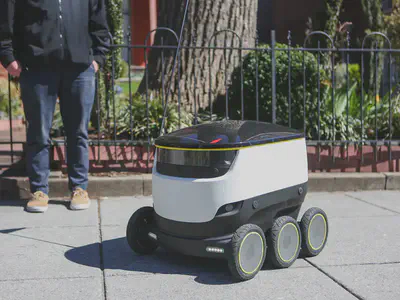
BPL Example 1
Robot food delivery company with a 50% chance of causing $200k in damage to a pedestrian each year.
Reducing robots speed is available as a possible precaution. Would reduce 100% of the harm to pedestrians at cost of $200k to to the company.
The company does not reduce the speed of its robots. Was the company negligent?
BPL Example 1
B = $200k
P * L = .5 * $200k = $100k
B > P * L, therefore not negligent
BPL Example 2
Same facts as before. Robot food delivery company with a 50% chance of causing $200k in damage to a pedestrian each year.
But now additional sensors for the robot is available as a possible precaution. Would reduce 50% of the harm to plaintiff at cost of $30k to the company.
The company takes no precautions. Was the company negligent?
BPL Example 2
B = $30k
P * L = .5 * $200k * .5 = $50k
B < P * L, therefore negligent
| Defendant’s Precaution | Cost of Precaution | Expected Cost to Plaintiff | Total Cost to Society |
|---|---|---|---|
| No Precaution | $0 | $100k | $100k |
| Defendant’s Precaution | Cost of Precaution | Expected Cost to Plaintiff | Total Cost to Society |
|---|---|---|---|
| No Precaution | $0 | $100k | $100k |
| Reduced speed | $200k | $0 | $200k |
| Defendant’s Precaution | Cost of Precaution | Expected Cost to Plaintiff | Total Cost to Society |
|---|---|---|---|
| No Precaution | $0 | $100k | $100k |
| Reduced speed | $200k | $0 | $200k |
| Added sensors | $30k | $50k | $80k |
Economic Theory of Negligence
- Fault = economic inefficiency - Embodies a trust in private ordering and economic incentives - Driven by a goal of maximizing overall economic welfare
Critiques of Economic Theory
- Incommeasurability of harms - Uncertainty of cost calculations
Negligence as a Cause of Action
Plaintiff must prove four elements:
- Duty
- Breach
- Causation
- Harm
Prima facie case of negligence
On its face, plaintiff has met the burden of proving duty, breach, causation, and harm.
Doesn’t mean plaintiff wins! Just means that a jury could find for the plaintiff.
Negligence as a Concept
Relates to the elements of duty and breach
The “fault” principle
Defined as a failure to exercise “reasonable care”
Ways to determine reasonable care under the circumstances include:
- Foreseeability - The Reasonable Person - Custom - Statute - Cost-Benefit Analysis (Hand Formula: B < P*L)
Special Considerations - Judge and jury relationship
Foreseeability
Foreseeability is a flexible concept.
Define any event in general enough terms and it is foreseeable.
Define any event in narrow enough terms and it is unforeseeable.
Reasonable Person Standard
An objective standard designed to clarify what reasonable care requires.
Exceptions to objective standard: - Physical disability - Children - Expertise
Not exceptions to objective standard - Mental disability - Children engaged in adult activity - Old age & infirmity
How to use customs and statutes
Sword for proving negligence Prove two things:
- Custom or statute = reasonable care - Defendant failed to comply with custom or statute -————————————————— Shield for disproving negligence Prove two things:
- Custom or statute = reasonable care - Defendant complied with custom or statute
Negligence per se
- Actor violates a statute that is designed to protect against this type of accident and harm
AND
- the accident victim is within the class of persons the statute is designed to protect.
Economic theory of negligence
Hand Formula
B = Burden of precautionary measures P = Probability of loss/harm L = Magnitude of loss/harm
IF B < PL AND defendant did not take on B THEN defendant was negligent
IF B > PL AND defendant did not take on B THEN defendant was NOT negligent
Noriega v. Loyola State Fair
Assignment: Deliver a memo detailing potential theories of negligence that could be argued in this case. For each argument, you should include:
What constituted reasonable care under the circumstances, and why, and how the defendant failed to exercise that duty of reasonable care
What the defense’s best counterarguments would be
In your estimation, how strong of a theory of negligence this is